By Claire Whitaker
Updated November 2026
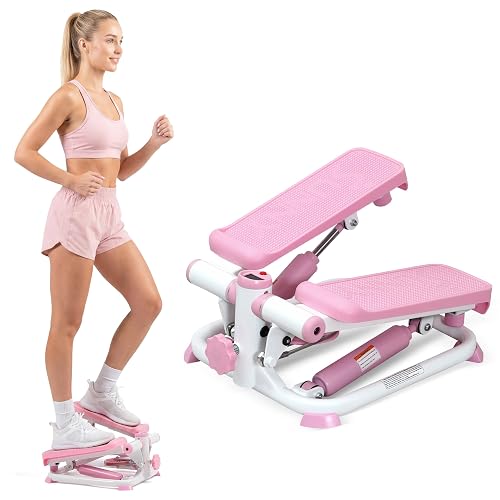
Does a mini stepper burn belly fat? It can help, but not directly. A mini stepper burns calories, and when you burn more calories than you eat over time, your body draws on stored fat from everywhere, including the belly. You cannot choose where that fat comes from, so the stepper helps overall fat loss rather than targeting your midsection. For a deeper look, Does a Mini Stepper Really Work? What It Can and Can't Do covers this in detail.
Why a Mini Stepper Can’t Target Belly Fat
Many people hope that a focused cardio habit will shrink the area they most want to change. Research on spot reduction has not supported this idea. When you exercise a specific muscle group, your body does not pull fat only from nearby tissue. The fat you lose depends largely on genetics, sex, age, and your overall energy balance. You may also like Do Jump Rope Burn Belly Fat? What Works and What Doesn't.
Shopping for one? See our guide: 6 Best Nordic Lifting Mini Steppers for Home Workouts (2026).
A mini stepper works your legs, hips, and glutes, and it raises your heart rate. That makes it a useful tool for total-body fat loss. Your belly may get leaner as a result, but the stepper alone won’t pick out that area. For another angle, check out Sunny Mini Stepper Assembly Review: What You Should Know.
The Factors That Actually Determine Results
Three things matter most when using a stepper to lose body fat:
- Total calorie balance. A typical session at a moderate pace might burn a few hundred calories, depending on your body weight, intensity, and duration. If you eat back all of those calories, the fat loss will be slow or nonexistent.
- Consistency. Three to five sessions per week, sustained over several months, does more than occasional hard workouts.
- Intensity and duration. Steady sessions of 20 to 30 minutes at a pace where you can talk in short sentences build a solid base. Longer or harder sessions burn more, but only if you can recover from them.
For a more specific sense of how many calories you burn, see Mini Stepper Calorie Burn: How Many Calories You Really Burn (2026).
How to Use a Mini Stepper for Better Fat Loss
If your goal is a leaner midsection, a simple plan works well:
- Start with 15 to 20 minutes, three times a week, at a pace you can hold without holding the rails.
- Add 2 to 3 minutes every week until you reach 30 minutes per session.
- Once the sessions feel comfortable, add short intervals: 30 seconds faster, then 60 seconds at your normal pace, repeated 5 to 6 times.
- Pair the stepper with strength work for your core, legs, and back, since muscle supports a more toned look.
- Track your waist measurement every two weeks, not just the scale, to see real change.
- Pay attention to food. Even a modest daily calorie reduction matters more than the stepper alone.
If you’re new to the machine, Mini Stepper Belly Fat: A Step-by-Step Guide to Using One Well walks through setup and form. Check that your stepper is stable and that your posture stays upright, with your core lightly engaged.
What We’d Use
A basic, sturdy stepper with a clear display makes it easier to stick with a routine. Look for a model with a weight rating that comfortably exceeds your body weight. View on Amazon
If you want to add light resistance for your legs and hips, a set of loop resistance bands is an easy add-on. View on Amazon
FAQ
Can I lose belly fat using only a mini stepper?
You can lose overall body fat with it, including around the belly, but you can’t target that area. Results depend on consistent workouts and a calorie deficit from your diet.
How long before I see a difference in my belly?
Many people notice changes in their waist measurement after 6 to 8 weeks of steady training and mindful eating. Individual timelines vary a lot. Worth reading next: Does a Mini Stepper Help with Glutes? What Works and What Doesn't.
Should I see a doctor before starting a stepper routine?
Yes, especially if you have heart, joint, or blood pressure concerns, or if you haven’t exercised in a long time. A doctor or physical therapist can recommend a safe starting intensity.
Related reading
- Why Is My Mini Stepper Not Counting Steps? 6 Causes and Fixes
- Trakk Mini Stepper Weight Limit: What Capacity to Look For (2026)
- Top 7 Mini Steppers with High Weight Capacity for Home Workouts
- Sunny Mini Stepper with Exercise Bands: 7 Best Picks for Home Workouts
Ready to choose one?
About Claire Whitaker
Claire Whitaker is part of our editorial team and reviews and edits our small & portable fitness equipment + low-impact training guides, checking product details against manufacturer specifications and owner feedback.